ESP – ENG
It’s been years since I’ve ridden here. There was a time when I was a regular on these tracks. Everything was still the same, in that kind of sensory déjà vu that washes over our entire body when we return to a place where we have lived important moments. Everything was still the same. Everything except one detail that caught my attention, something I’ve been noticing quite a lot lately: I constantly came across different singletracks that crossed the valley from side to side, sometimes parallel to the road itself, sometimes perpendicular or zigzagging along the slopes. Not so long ago they were not there.
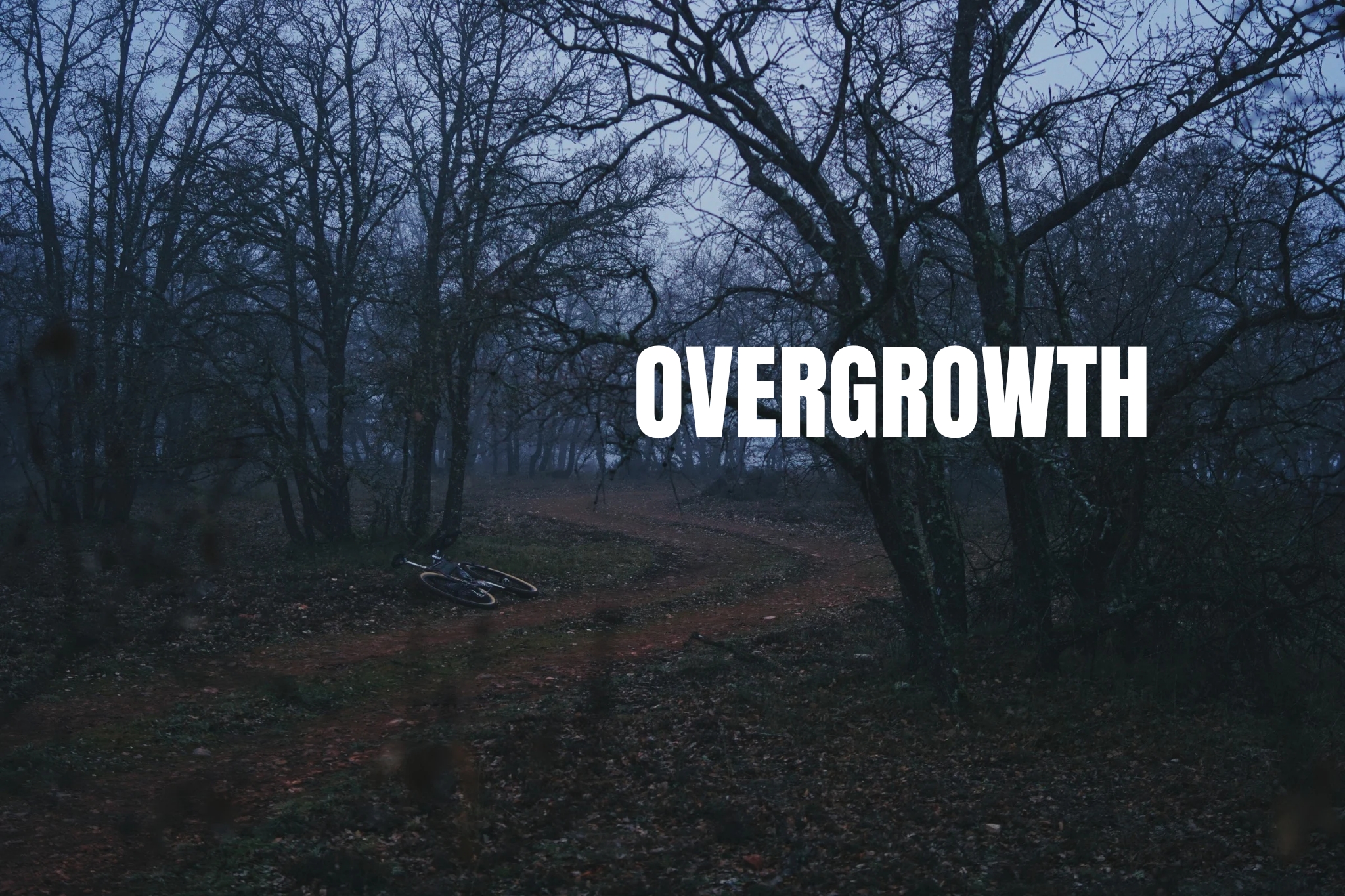
The number of trails crisscrossing our mountains has grown exponentially in recent years. It’s true that nowadays sport is more accessible; many more of us have discovered and need its benefits. However, it’s not just a matter of numbers, as even in sparsely populated areas with practically empty roads and double-tracks, we see this overgrowth of new trails.
Years ago, when I transitioned from tarmac to gravel and bikepacking, I undeniably began to develop a greater connection and sensitivity to the nature around me. The time I spent completely integrated into the environment also made me see it as a treatment, a therapy, a tool for awareness, starting, of course, with myself. The motto «Leave No Trace» became part of my entire mental discourse, motivated by the excessive normalisation nowadays of encountering all kinds of rubbish, cellulose, etc., on any of our mountain trips. Later came the sensitivity and awareness towards the silence of natural spaces. Ultimately, it was about protecting, helping to protect, that which gives us so much life. Those lungs of the cities, those sanctuaries, those islands of emptiness in our demographically dense lives.
To get an idea of this situation I’m describing, I propose a small exercise: if any of us consult a familiar area on the heatmaps of a sports tracking platform or app, whether for cycling, walking, or even motor vehicles (I won’t mention any), and compare it with our pre-platform memory from 15, 20, 25 years ago, we would probably identify a large number of tracks in places where there was only nature or faint animal tracks.
I do not intend to get into the controversies that are being generated in many highly urban areas due to prohibitions on certain users in certain spaces; I believe that is another issue. I merely intend to offer some reflections that make us consider certain questions.
Where is the red line between free use, or the concept of «the countryside belongs to everyone», and the potential irreversible effect on the health of an ecosystem? At what point might authorities or conservation experts decide that it is already too much? Sometimes I wonder if I’m exaggerating and we are still far from that point, or if we passed it a long time ago.
I understand that it would not be easy to objectively determine the extent to which this overgrowth of trails affects an ecosystem. It would be necessary to study parameters such as erosion of vegetation, the capacity to retain or drain storm water, or analyse the effect it might have on the population stability of certain animal species, as even on some occasions, paths used by local fauna can serve as a basis for becoming new routes on which to demonstrate our technical performance on two wheels. Or, more worryingly, they may even form part of the route of a competition.
Can we really justify this overgrowth of trails with the increasing demand for nature by sedentary-active-urban individuals when 90% of the already established roads and double-tracks remain sparsely used?
There will be a thousand points of view, a thousand opinions, coming from thousands of different realities, not to mention, as I pointed out before, those environments already heated up with a ban or on the way to it. I consider it a delicate subject, I know, but one worth talking about, raising awareness about, learning from, listening to, but never trying to hide and see what happens. That would be the perfect breeding ground for generating a real problem. Therefore, with these words, I only intend to show one of those thousands of points of view, mine. What’s yours?
(Comments in the Spanish version)
Suscríbete
Introduce tu email para recibir todas las novedades.
 Montañas Vacías