
ESP – ENG
It’s always a pleasure to welcome fellow publishers to this space. On this occasion, Luisa Vinueza shares her reflections on her time in Montañas Vacías last autumn. All of this is accompanied by Nacho Pellejero’s spectacular and iconic photographs. I hope you enjoy this piece as much as I have.
Article and video also available at bikepacking.com
Text by Luisa Vinueza, @luisavinuezaa
Photos by Nacho Pellejero, @natxop

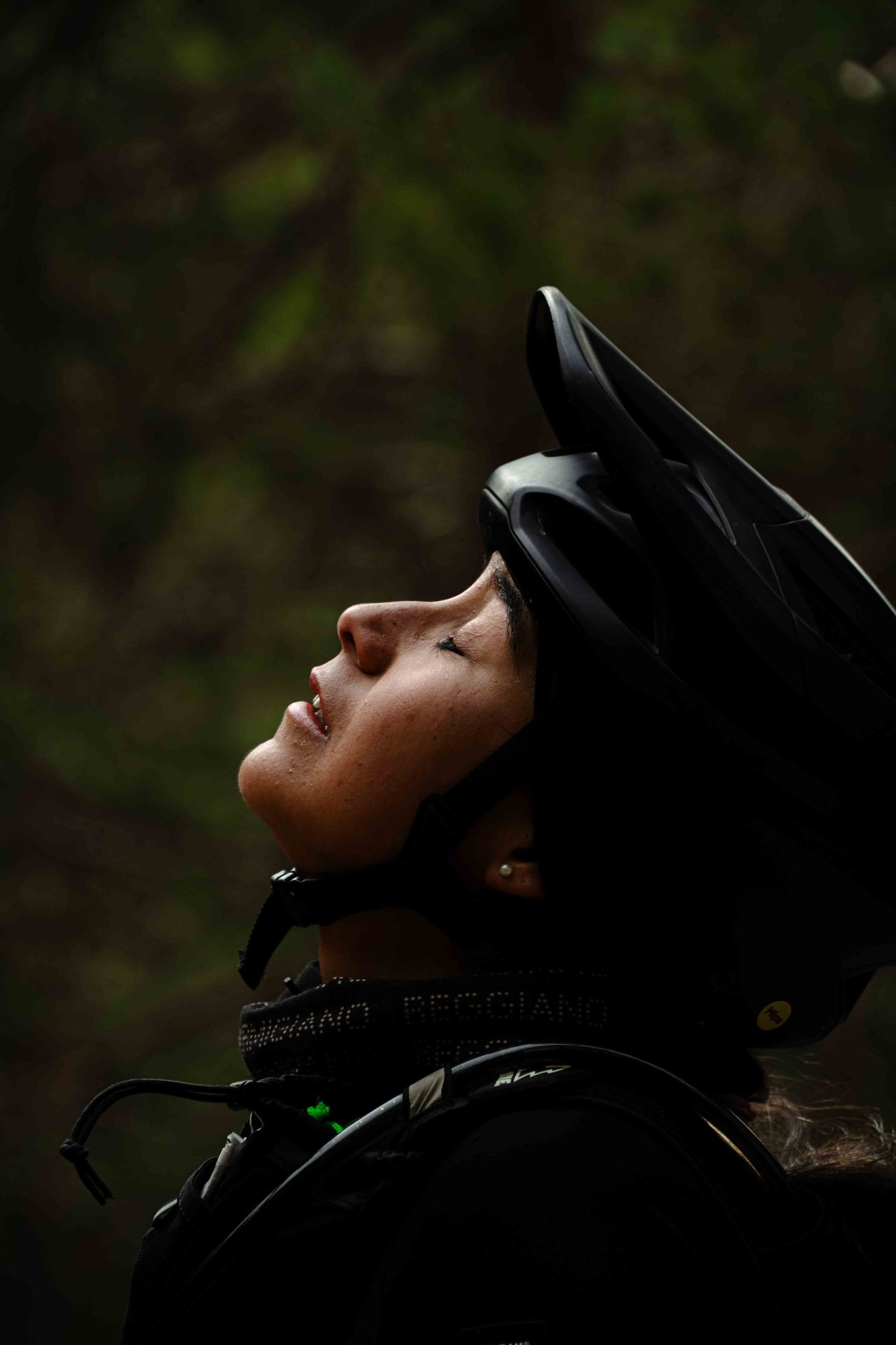
Sometimes the most meaningful things happen in silence.
Not the absence of sound, but the kind of silence that slowly fills your senses when you move through a place at the pace of a bicycle. The kind where you begin to notice the wind brushing through pine trees, the smell of wet earth after a short storm, or the sound of small rocks bouncing off your bike as you ride down the trail.
That silence is what defines Montañas Vacías.
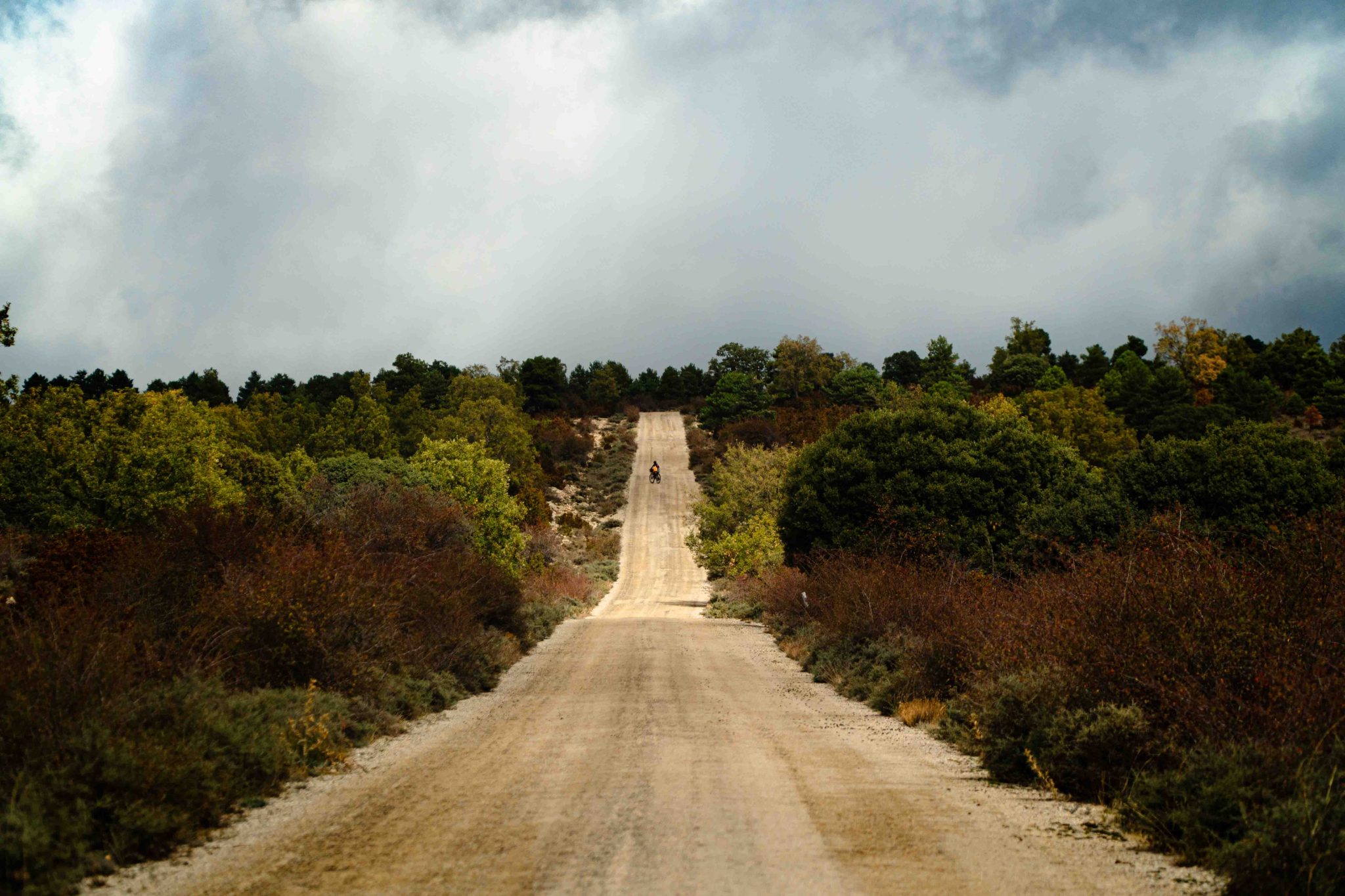
Located in Spain’s vast interior, this region is often called La Laponia Española — the Spanish Lapland — not because of snow, but because of how empty it is.
Population density here is among the lowest in Europe. Entire valleys hold only a handful of residents. Some villages are slowly fading, others quietly holding on.
And yet, the landscape feels incredibly alive.
Montañas Vacías, the bikepacking route created by Ernesto Pastor, crosses this forgotten territory through a network of gravel roads, mountain tracks, and remote backcountry paths. The project was born as a way to bring attention to the region and the people who still live there, offering cyclists the chance to experience one of the wildest corners of Spain.
For us, it became something more personal.
Eight days.
517 kilometers.
Just over 10,900 meters of climbing.
Two riders.
One route.
But two very different journeys.
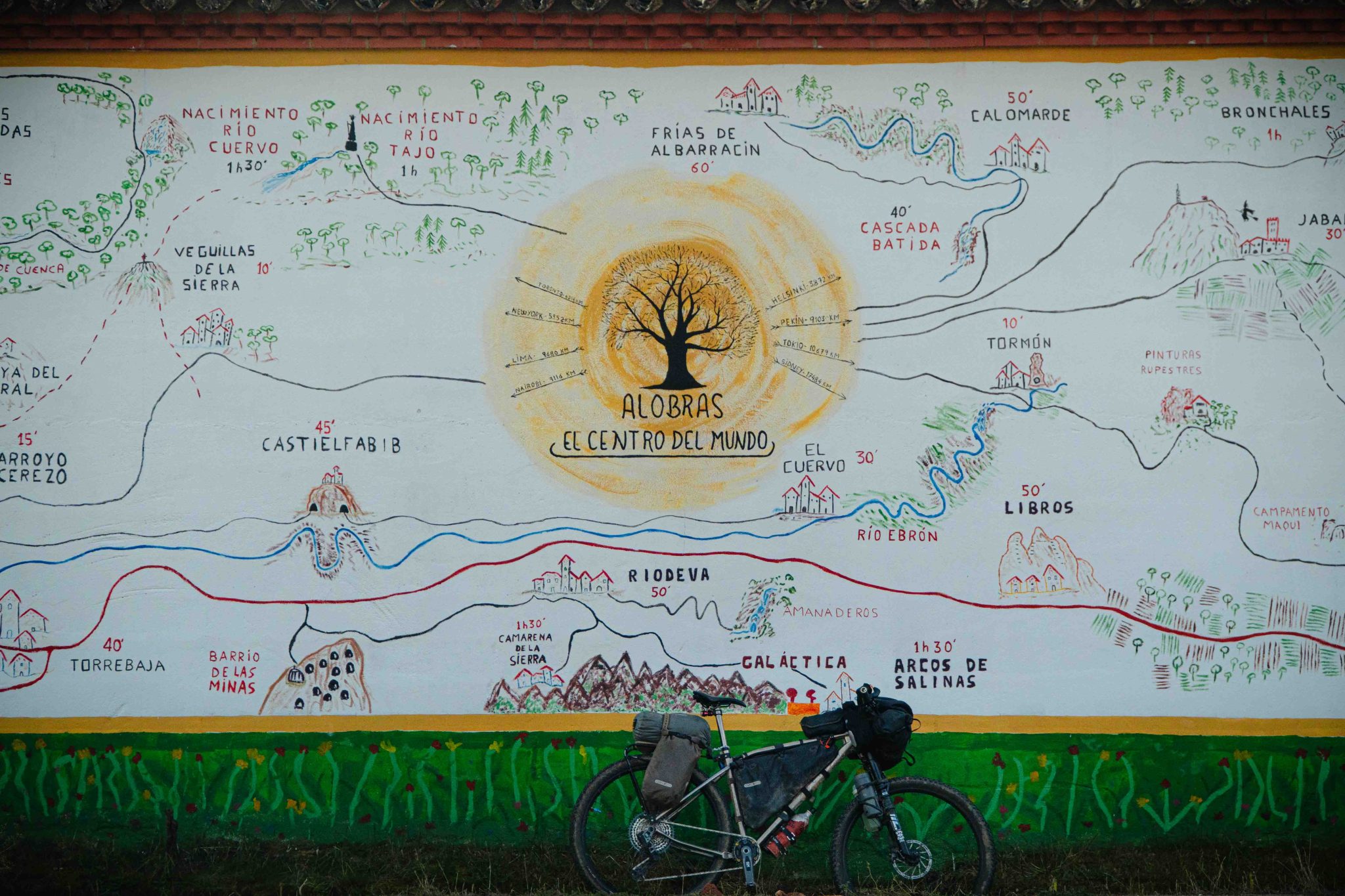

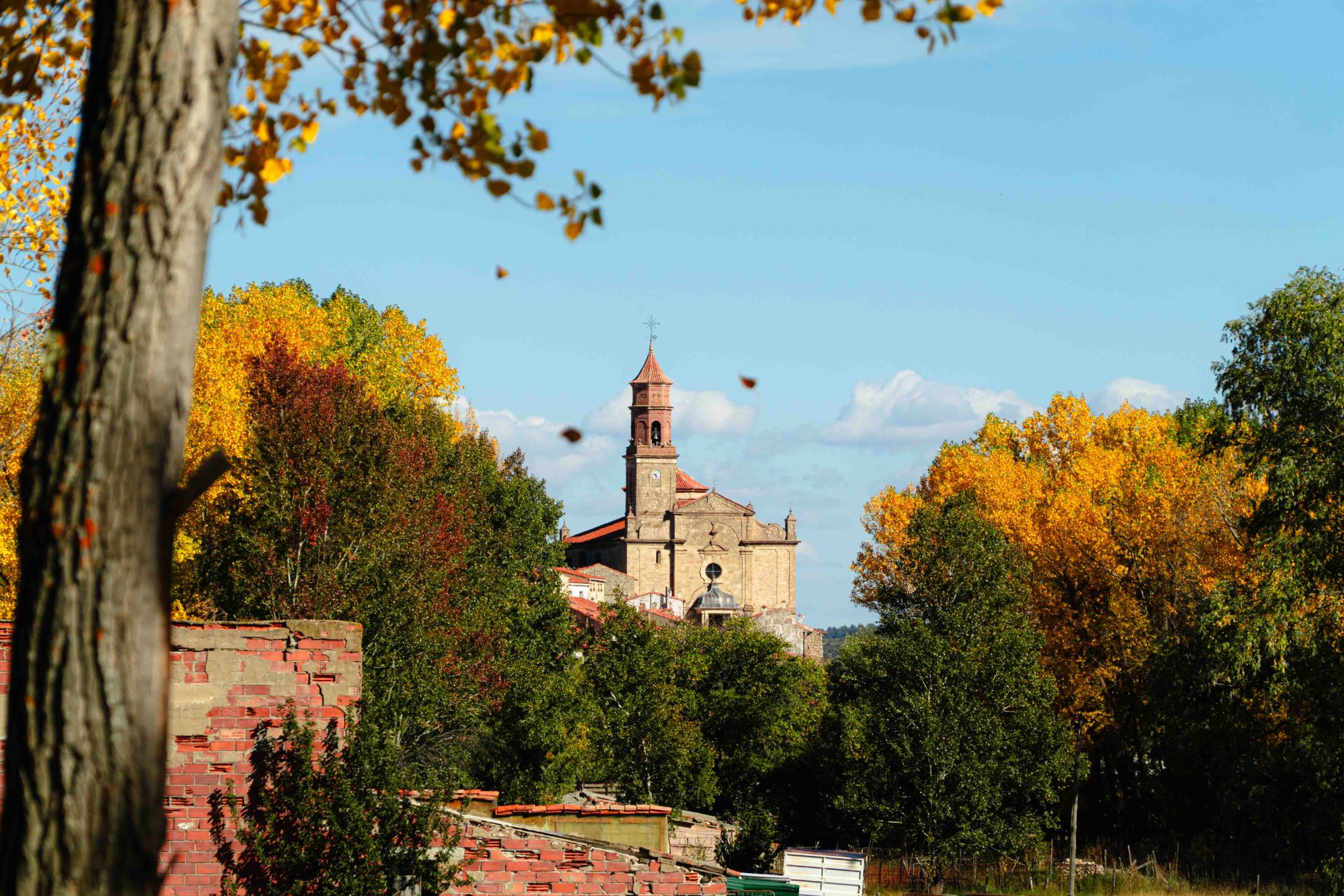
LEAVING TERUEL
We left Teruel late that evening, which meant my first kilometers happened in the dark.
It was my first long bikepacking trip, and honestly I was terrified.
But I knew this was something I really wanted to try. And sometimes the only way to move past fear is to confront it.

Two Riders, Two Perspectives
Bikepacking had been part of Nacho’s life for years. Ultra-distance rides, remote routes, long days on the bike — this is his world.
For him, the rhythm of pedaling day after day feels familiar — almost natural.
For me, this was a completely new world.
That contrast became one of the most interesting parts of the journey.
Riding with someone who moves so confidently through this world made me believe that maybe I could do it too.
I followed closely behind him. I watched how he moved through the terrain, how he chose the pace, how he navigated the roads ahead, how he made decisions.
At times it felt like stepping into someone else’s world.
But slowly, kilometer by kilometer, it began to feel like my own.
We were riding the same bikes — Chiru Highlanders built for long-distance adventure — but what we were experiencing internally couldn’t have been more different.
And that’s exactly what the film «One Frame / Two Journeys» tries to capture: the possibility of traveling in a different way—slower, quieter, and more present.

Learning to Pay Attention
Somewhere during those first days, something shifted inside me.
Bikepacking has a way of stripping things down. Your world becomes smaller and simpler. What matters becomes immediate and physical: the next climb, the weather, water, food, where you’ll sleep that night.
And with that simplicity comes attention.
I’ve always known I spend too much time inside my own head. I tend to think a lot, worry a lot, plan a lot, imagine things that haven’t even happened yet. But on the bike, surrounded by silence, I realized I could choose something different.
So I started focusing on my senses.
What I could smell.
What I could hear.
What was right in front of me.
Real silence is something we rarely experience anymore. Our lives are full of noise, information, and constant stimulation.
In Montañas Vacías, that silence comes back. At first it feels unfamiliar, almost uncomfortable. But after a while it becomes something else — something calming, something that gently brings you back to the present moment, to you.

The Rhythm of the Mountains
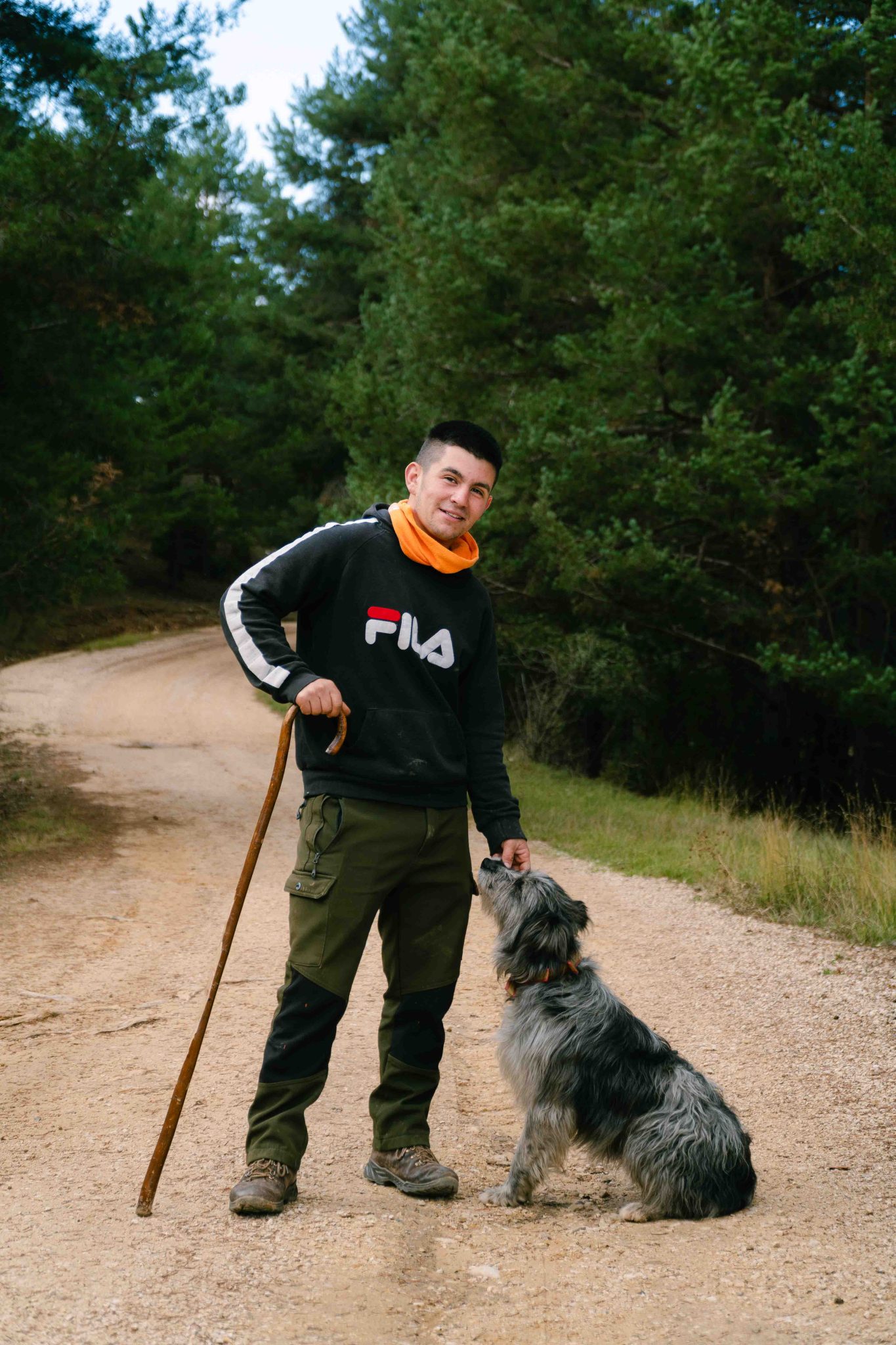
Along the way we met people who still live in these mountains — shepherds, farmers, villagers who quietly keep this region alive.
Regions like this walk a delicate line. They deserve to be seen and appreciated, but not overwhelmed. Routes like Montañas Vacías offer a way to experience them slowly and respectfully.
What surprised me the most about the trip was how many emotions could live inside a single journey.
Gratitude. Connection. Fear. Joy. Nostalgia. Admiration for the landscape and for the people who live there.
And something I didn’t expect: a growing trust in myself.
Every climb, every long day on the bike quietly reminded me that I was capable of more than I had imagined.
Sleeping in the Silence
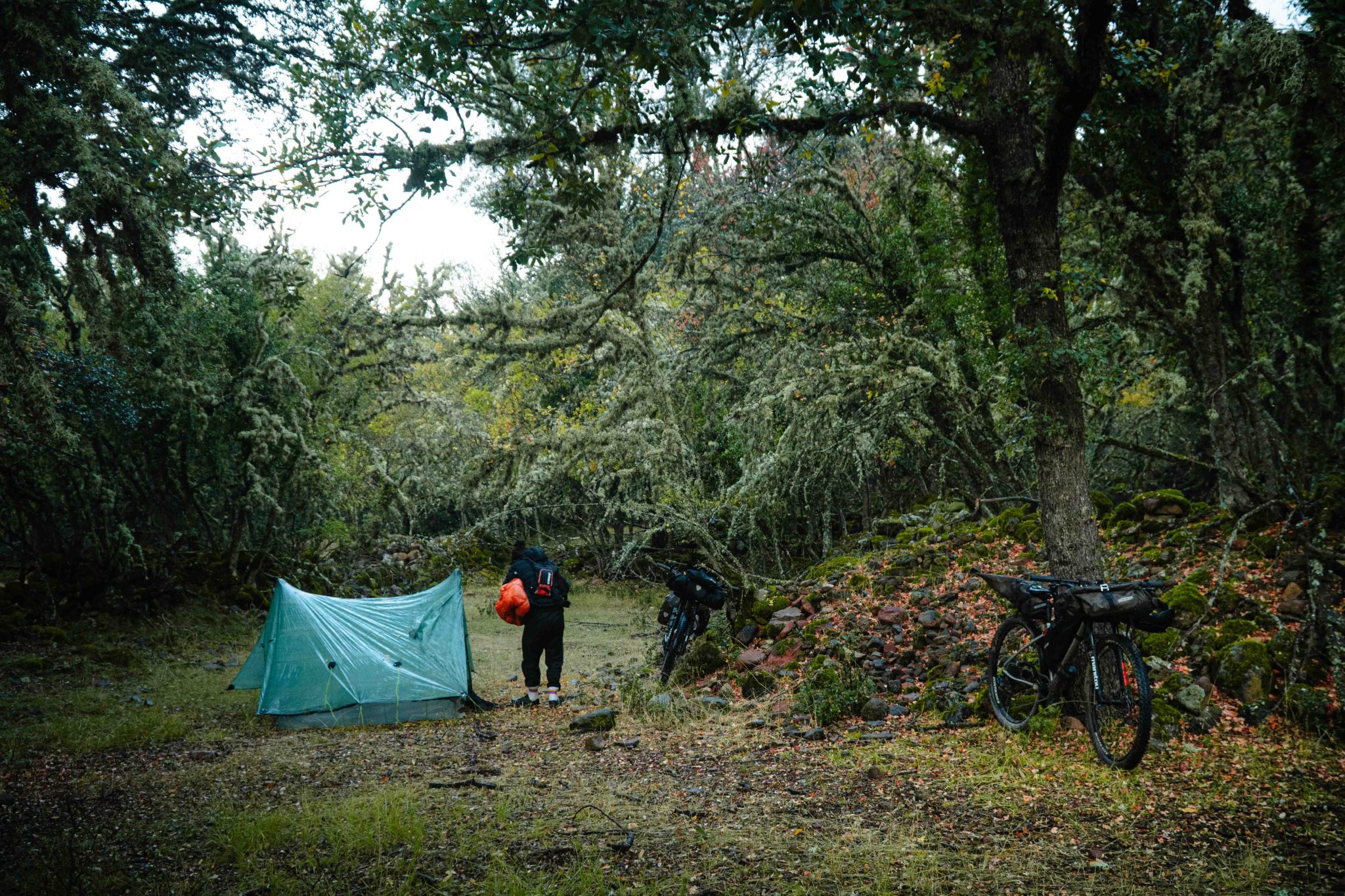
Most nights we slept outside — sometimes in small mountain refuges, sometimes pitching our tent somewhere along the route.
One thing that surprised me was how well cared for many of the refuges are. Small shelters, simple but thoughtfully maintained, offering a place to rest after long days. They felt like quiet reminders that people still care deeply about these landscapes. I hope riders who pass through treat them with the same respect, so they can continue to exist for those who come after.
Sleeping in remote places was something new for me. The darkness, the forest, and the thought of animals moving somewhere nearby made those first nights a little intimidating.
One night we set up our tent without really knowing where we were. It was already dark and we decided it was a good place to stop. The next morning, when we opened the tent, we realized we had camped right next to a viewpoint, so we had a beautiful sunrise.
Moments like that are impossible to plan — they simply happen when you travel this way.
Experiences like these also remind you how important it is to take care of places like this: respecting the animals that live there, leaving no trace, and moving through the landscape with care.
Because part of the beauty of Montañas Vacías is that it still feels wild.

Bringing Home Into the Landscape
For me, the landscapes of Montañas Vacías triggered unexpected memories.
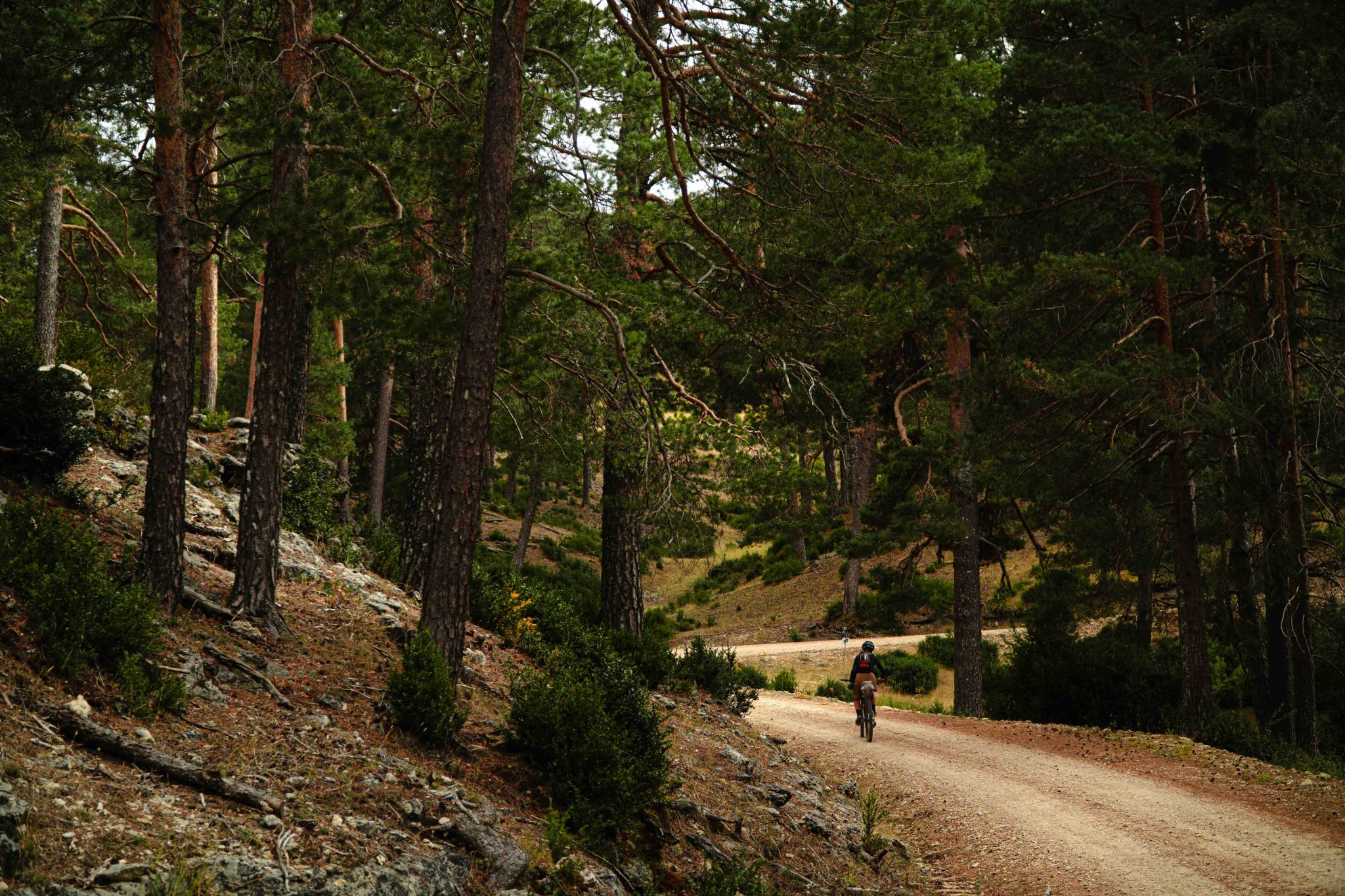
Growing up in Ecuador, I often found myself comparing these mountains to the high plains of the Andes — the Páramo.
Living far from home now, I often miss that connection — and the people I shared it with.
Even though the landscapes are completely different, the feeling of open space and vast silence carried something familiar.
It wasn’t really about similarity.
It was about connection.
About finding small pieces of home in unfamiliar places.
Life and Time
In many ways, the trip changed how I think about life itself.
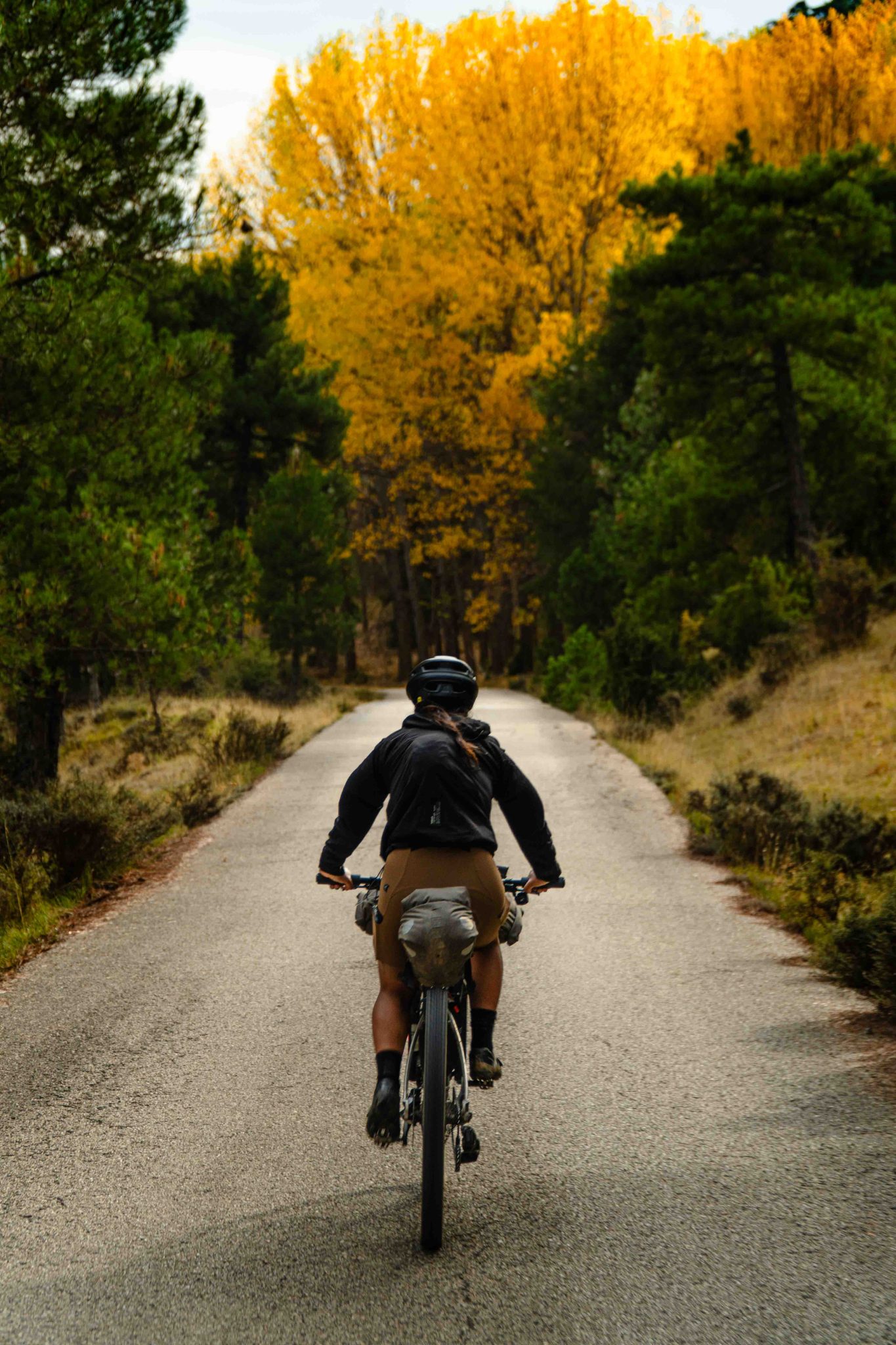
Bikepacking is simple: you move forward, you adapt to what the day brings, and you learn to trust your decisions.
It reminds me that life works in a similar way. The path unfolds little by little, and the best thing we can do is experience it fully, slowly, and with as much presence as possible.
For years I admired women I saw online doing long bikepacking trips through remote places. They seemed strong, free, independent, super cool.
Part of me always wondered if I could ever feel like that too.
Somewhere during this trip I realized something simple: maybe I already was.
Returning to the Noise
By the final days, the body begins to feel everything.
The wind.
The climbs.
The accumulated fatigue.
But also something else: the quiet sadness that appears when you realize the journey is almost over.
Bikepacking creates a strange rhythm.
Each day you make small decisions — where to sleep, how far to ride, whether to push forward or stop early.
Life becomes simple.
Food.
Shelter.
Movement.
And that simplicity is surprisingly beautiful.
When we finally rolled back toward civilization, the contrast was immediate.
Traffic.
Noise.
Hassle.
After days of sharing everything — the road, the effort, the silence — the city suddenly felt overwhelming.

Sharing the Road
At one point during the trip, I remembered a quote from Into the Wild that had stayed with me for years:
“Happiness is only real when shared.”
Looking back, that’s what made Montañas Vacías special.
Not just the landscapes.
Not the kilometers.
Not the elevation.
But the experience of sharing the journey.
I’m deeply grateful to Nacho.
He was the one who introduced me to the bikepacking world, the one who gave me the bike I rode on this trip, and the one who kept encouraging me to trust myself and become more confident.
More than anything, what made this journey special was sharing it with him.
If someone feels curious about Montañas Vacías after watching the film, my only advice would be this:
Go with an open heart.
Take it slowly.
Pay attention to the small things.
Because sometimes the most meaningful journeys are not about distance at all, but about learning to experience the world more fully.
Love u marido
Luisa. La marida.

You can watch the video of Luisa and Nacho’s adventure here:
(Comments on the Spanish version of this article.)
Subscribe
Enter your email to stay updated.