
A mysterious bird hides among the rugged and desolate stretches of our moors. Discreet, elusive and completely camouflaged in its surroundings, the Dupont’s Lark would be almost impossible to spot if not for its increasingly infrequent song, as it is one of the most endangered birds in Europe. For all these reasons, it is known as the «moorland ghost».
That nickname doesn’t surprise me at all, I spend dozens of hours each year walking or riding through different moorland areas nearby, and yet, I have never managed to come across them. Different seasons, different times of day, sunsets, sunrises. I have never been lucky enough to see the Dupont’s Lark (Chersophilus duponti), which to me, without a doubt, is our own «Snow Leopard«.
Perhaps inspired by that fascinating book by Sylvain Tesson, by that romantic quest for the utopian, I have repeatedly approached its kingdom, armed with my recorder and microphones.
There is no more endangered bird in our area. It is very sensitive to changes in its habitat, which is already very limited. The high moorlands are not among the most protected and appreciated environments here lately. However, it is a landscape that overwhelms me, that excites me. Not long ago I heard a foreign traveler say that crossing a moor was like riding in Scotland, but dry, with no midges or ticks. We haven’t seen it that way here, and it is one of the most mistreated and threatened landscapes.
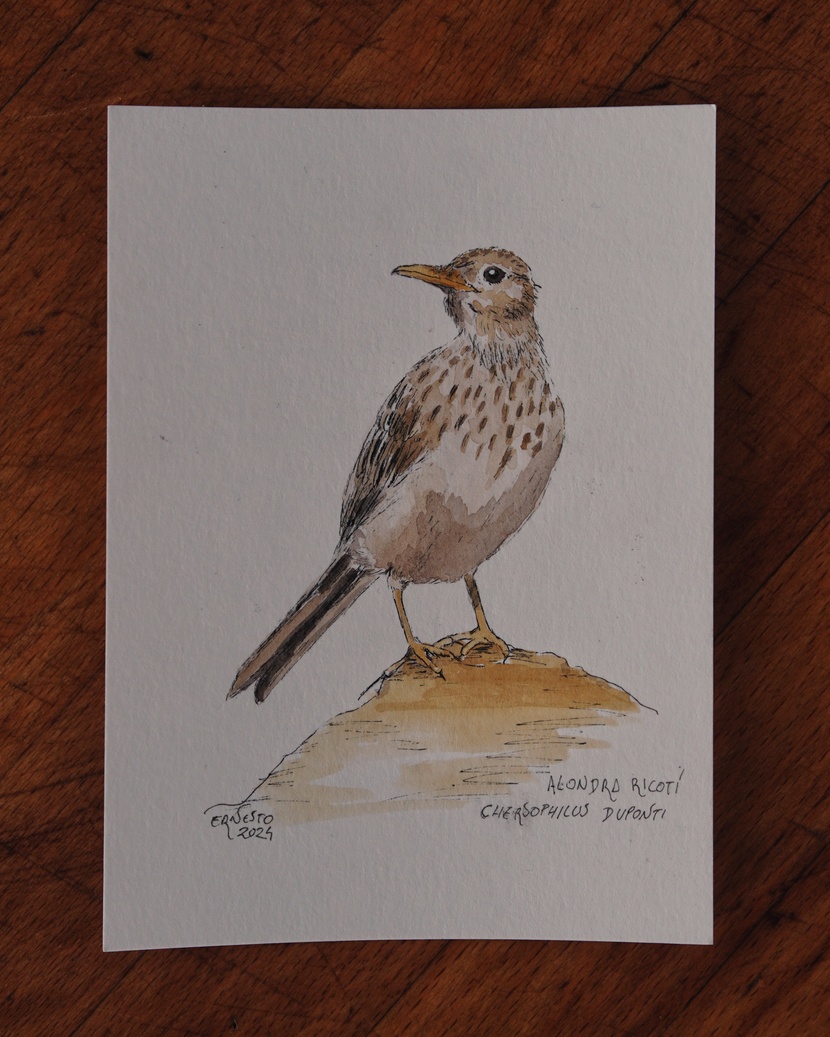
My commitments allowed me a twelve-hour window, enough for one more attempt in one of the few practically untouched high altitude páramos that we can still find around Teruel. A good friend of mine calls them «purposeful routes»: combining the sheer pleasure of cycling with a «mission» that fuels some of our craziness.
I wanted to give it another try. I didn’t really know if there would be many more opportunities. Things don’t look promising; the Dupont’s Lark won’t have an easy time in the years to come. When you start from the impossible, expectations aren’t very high, so you learn to love the process. The purpose itself is just an added incentive, but the real underlying goal will be achieved anyway: a bike ride with my camera, recorder and notebook. A success in itself.
The chosen location: Los Santos de la Piedra, near Pozondón. A few recordings at sunset, some photos, and then I would search for a place to rest for a few hours until dawn, when I would start setting up my microphones again. And of course the usual dinner, that becomes something special in a place like this: ham, cheese, nuts, some fruit and dark chocolate. Bliss.
That night, I went to bed calculating the time I would have to leave in order to get back to my duties in time. Being mid-April, the first rays of sun would catch me pedaling to the car, so there wouldn’t be much time to indulge in morning recordings. No problem, the Michelin-starred dinner was already in the bag.


At this time of year you can hear some early or late-night cuckoos (Cuculus canorus), depending on how you look at it. However, at around a quarter past five in the morning, something subtle caught my attention. In my drowsy state I began to hear something else. A distant, deep, flute-like song that I felt in my chest like a kind of lament. There was something emotional about those notes. My first instinct was to roll over in my sleeping bag, which was normal considering the temperature was hovering around zero degrees. But the song kept echoing in my head. I had never heard it before. What if…? Could it be…? I think it is!
The mix of rush, cold, silence and excitement is not easy, especially at that hour. I prepared all the recording gear and, illuminated only by a faint crescent moon, I walked a few hundred meters to some hedges that would serve as a reference to find my gear at dawn.
With the utmost stealth, I returned to the comfort of my sleeping bag and waited, unable to close my eyes with that melancholic soundtrack playing in my head. As dawn broke, dozens of skylarks (Alauda arvensis) joined the chorus and our «Snow Leopard» was no longer audible.
An uncomfortable mix of emotions ran through my body as I packed my gear. I loaded everything up and got on my bike with the first rays of sunshine.
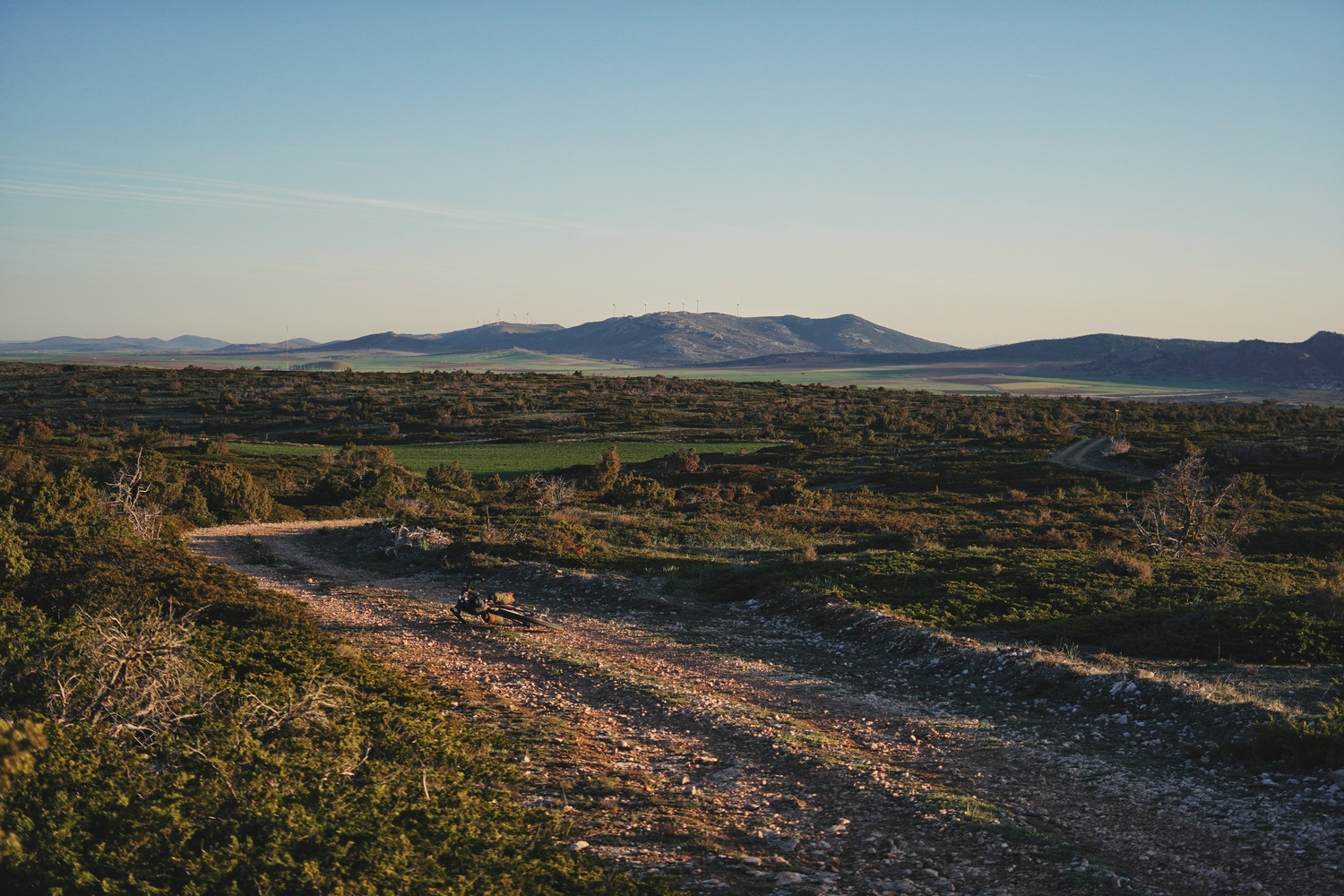
On one hand, I felt a sense of fulfilment just by being in that place, with the possibility of capturing a faint but precious acoustic record. On the other hand, I felt sadness and helplessness, knowing that the song I perceived as a lament probably came from one of the last Dupont’s Larks on our moorlands.
May this recording be my small tribute to this little bird, a record for the future, but also a call to reflect on the role of our species in the environment that surrounds us. I hope you enjoy listening to it as much as I enjoyed chasing it: